A Plus-Size Women’s Guide on What to Wear to Job Interviews
Aug 07,2026 | Voycestas Plus
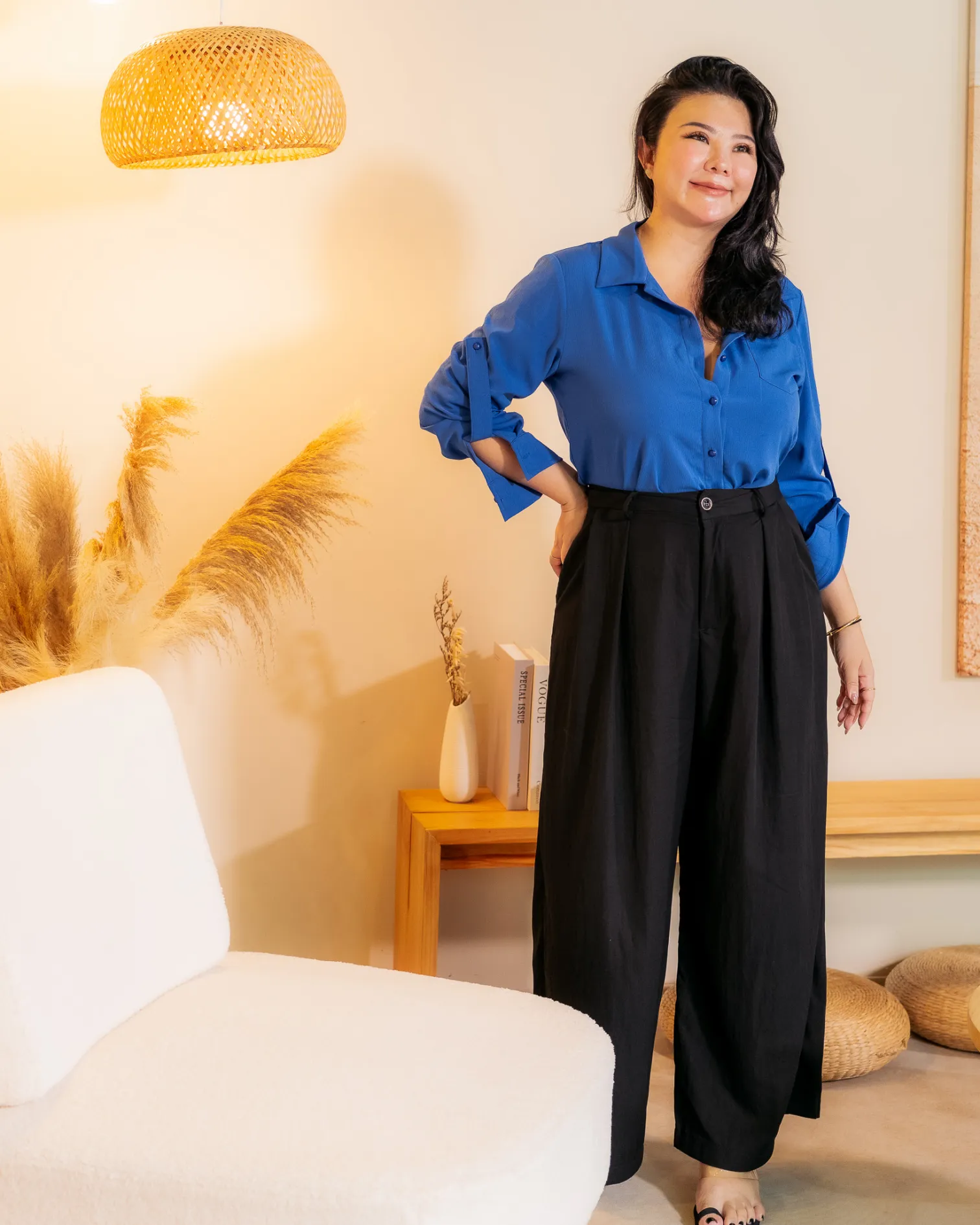
Interview dressing is hard enough, and for plus-size women it comes with a layer of difficulty that rarely gets acknowledged. Most professional workwear is structured and form-fitting by design, cut to sit precisely at the shoulder, nip at the waist and skim the hip in a manner that assumes a very specific set of proportions. When your body does not fit that template (and most bodies do not), the whole exercise becomes about compromise: the blazer that fits the back but pulls at the bust, the trousers that work at the waist but not the hip, the dress that looked entirely different on the model or mannequin.
Getting interview-ready as a plus-size woman deserves more practical guidance than it usually gets. This article is the resource we wish had existed sooner.
Start with fit first
Nothing an interview outfit does matters more than fitting well, and for women in general, this is where the most time is worth spending. Clothes that pull, gap or sit awkwardly draw attention in exactly the wrong direction during an interview. The goal to keep in mind is an outfit the interviewer stops noticing after the first 30 seconds because it presents so well that it simply becomes part of how you carry yourself. Try everything sitting down as well as standing. According to experience, a skirt that sits perfectly upright can ride up considerably when seated, and a waistband that feels comfortable standing can become distracting after an hour. You might not be able to anticipate whether it is a one-hour chat or a full-day panel, but at least you can make sure the outfit is ready for either.
Our advice? Buy the size that fits your largest point and alter from there, because a well-tailored piece in a slightly larger size will always outperform something technically correct on the label that does not sit right on the body.
Read: 10 Best Inclusive Female Clothing Brands to Shop in Singapore
The blazer is the most versatile piece you can own for this
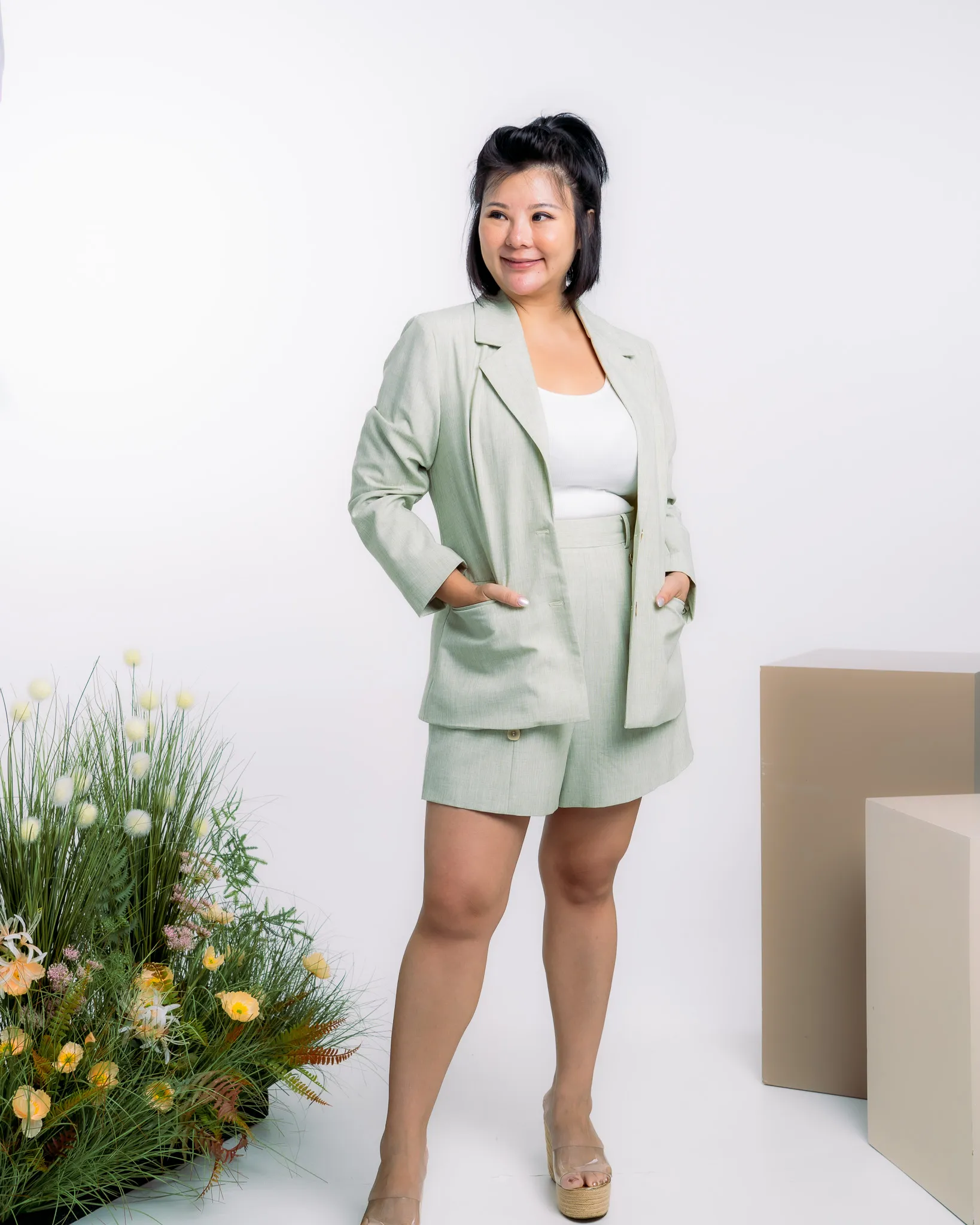
A well-fitted blazer is the closest thing interview dressing has to a universal solution, and the key fit points are the shoulders and the back. Both should lie flat without pulling or dropping. In a classic neutral, black, navy, camel or grey, a good blazer works across industries and dress codes and earns its place in the wardrobe even (and some might say, especially) after you’ve passed the interview. If structured blazers feel too stuffy for the company culture, an unstructured blazer in a quality fabric gives you the polish without the stiffness, and is also conveniently more comfortable across a long day.
Our advice? Wear the full outfit underneath when trying blazers on, because the fit changes significantly depending on what is beneath it. Shopping for one over a thin T-shirt will almost never give you an accurate picture of how it actually wears.
Trousers are almost always right
A well-cut wide-leg or straight-leg trouser is one of the most reliable interview pieces, owing to its ability to manifest a long clean line from hip to hem that works across formal and smart casual dress codes. A mid-to-high rise sits well when seated and avoids waistband gaping, which is a small detail that becomes a noticeable one across a long interview day. If tailored flawlessly, a trouser does more for an interview outfit than almost any other single piece. Avoid fabrics that crease heavily when seated—to illustrate, linen is beautiful but will show every fold accumulated from commuting by the time you reach the interview room.
Our advice? Check the hem length specifically with the footwear you plan to wear, as a trouser hemmed for heels worn with flats on the day can look like an oversight instead of a choice.
Dresses and skirts that work hard for you
A midi dress or skirt is the most reliable length for plus-size women across almost every interview setting, being formal enough for conservative industries and relaxed enough for creative ones. A wrap dress in a structured fabric is particularly strong here. Besides simply adjusting to the body naturally, it also cinches the waist, and moves fluidly across a full day. A pencil skirt paired with a well-fitted blouse works well for more formal settings, provided the fit across the hips allows comfortable movement. A dress with pockets is worth seeking out for practical reasons too, having somewhere to put your hands during a nervous moment is useful (just do not treat them as a handbag, a visibly stuffed pocket undoes the whole look).
Our advice? Avoid anything with a hem that rises significantly when seated—sit down in the changing room and check before you commit. Skirt lengths behave very differently standing versus sitting.
Tops and blouses to build around
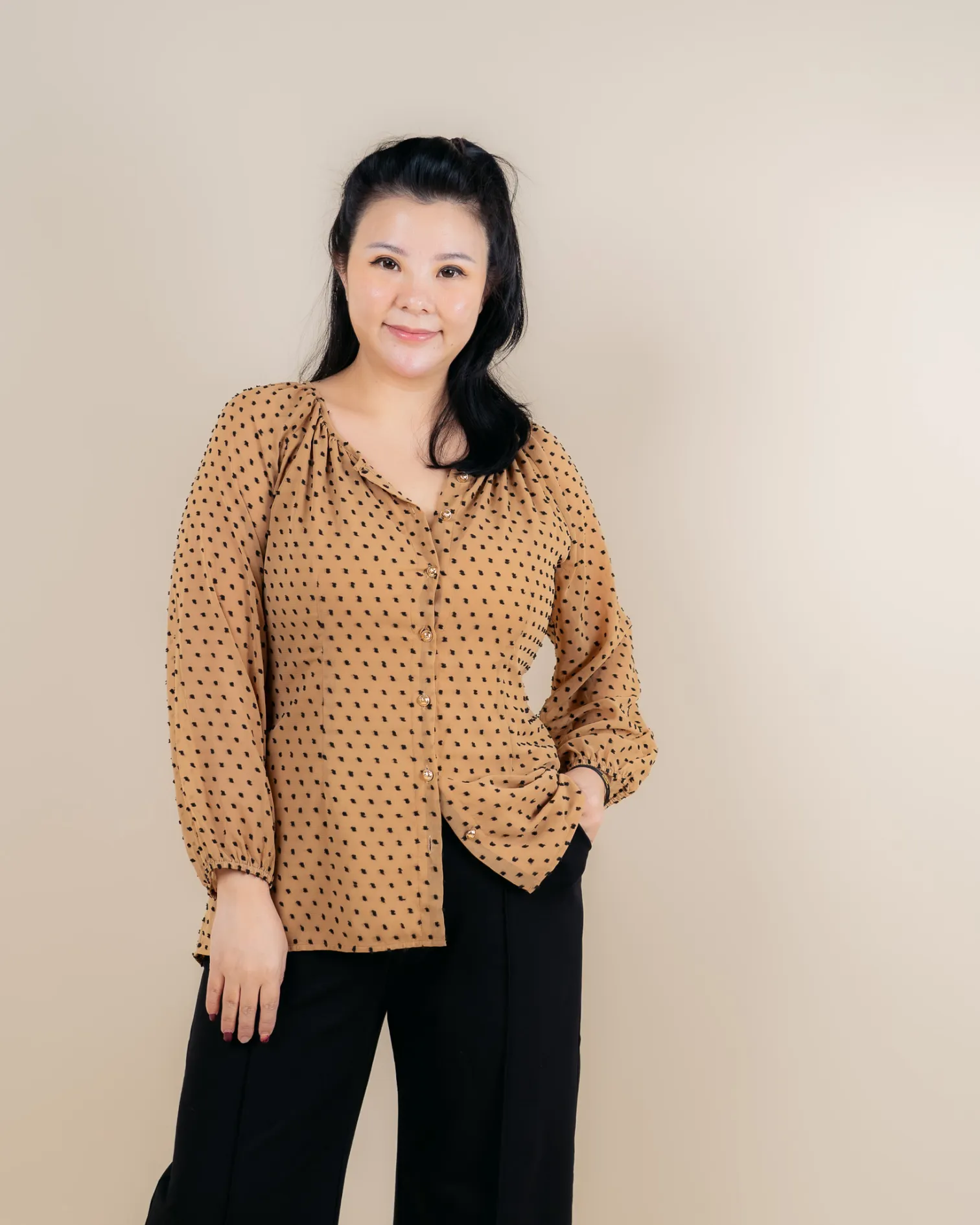
The top underneath a blazer or paired with a trouser is where interview dressing can go wrong if it is not given enough attention. Fit across the bust is particularly important: a blouse that pulls or gaps between buttons draws the eye immediately and is visible even under a blazer. A well-fitted blouse in a quality fabric, a structured cotton, a fine knit or an elegant chiffon in a neutral or considered colour, is the foundation the rest of the outfit builds from. A modest V-neckline is consistently flattering across plus-size figures and adds a polished touch without any additional effort.
Our advice? Avoid fabrics that show sweat easily. While nerves are a normal part of interviews, dressing in a quality cotton or structured woven means the fabric is at least on your side when the nerves are not.
Shoes and accessories that finish the outfit without overcomplicating it
Shoes and accessories should support the outfit rather than compete with it, and comfort is a priority every day, much less during one where your head is already elsewhere. A shoe you cannot walk confidently in is a liability in an interview setting, and heels that are too high for a building with stairs or a long walk from the car park will have you distracted before you have sat down. A block heel, a kitten heel or a well-made flat in a neutral finish is perfectly professional and feels more manageable no matter the duration or distance. Keep jewellery minimal—anything that makes noise when you move must be left at home.
Our advice? A structured bag that holds everything without looking overstuffed is worth having specifically for interviews, because a tote spilling over is a small but noticeable detail.
A few general tips before the day
- Research the company culture before choosing your outfit. A fintech startup and a law firm are entirely different dress code environments, and dressing appropriately for the specific culture shows you have done your homework.
- Wear the outfit at least once before the interview. An outfit that has never been worn together can surprise you on the day in ways that are difficult to manage under pressure.
- Dress one level above the day-to-day dress code. If the office is business casual, interview in smart. The slight step up communicates respect without looking out of place.
- Have a backup option ready. Spills happen, hems come undone and a last-minute discovery that something no longer fits is not the morning surprise anyone needs.
- Comfort is not a compromise. An outfit you feel good in will always perform better in an interview than something technically appropriate that you cannot stop thinking about, or worse, fiddling with.
Clothes that work as hard as you do
The best interview outfit is the one you stop thinking about the moment you leave the house, because it fits, it feels right and it is entirely appropriate for where you are going. Once you have those pieces in your wardrobe, getting dressed for the next one will take considerably less thought than the first, and that is exactly how it should be.
For plus-size women looking for pieces that fit properly and look polished without trying too hard, Voycestas Plus has a considered range worth exploring before your next interview. Discover it at Voycestas Plus, and go get that job.